Rebuilding Rewards During Platform Integration

Introduction
Rewards System Update
Early in my time at the company, I was handed one of the more complex design challenges of my career: unifying the rewards systems of two simultaneous acquisitions, Redbrick and Simply Well, into a single core platform. The work went beyond reconciling technical differences in incentive models. Members were genuinely confused by caps, deadlines, and grouped win conditions, so clarity became just as important as consistency. Four rounds of user testing shaped an experience built around transparency, motivation, and trust.
I led the member-facing rewards experience as the primary designer, while also working with our internal Gen-Admin team to build and configure the programs for clients. That dual perspective, seeing both the member and admin side, informed how I approached the work throughout. Cross-functional partnership with product, engineering, and my design manager kept strategy and execution aligned across every round of testing and iteration.
The Problem
Dual Acquisition Complexity
The complexity here wasn't just integrating one new system, it was reconciling three: our core platform, Redbrick, and Simply Well. They shared similar reward groupings but diverged significantly in cap limits, campaign structures, default logic, prerequisite sequencing, and how progress was shown to members. Engineering was the hardest constraint. I wanted to give members richer, action-specific guidance. For something like tracking sleep, that meant spelling out what counted and how to earn it. But generating that detail consistently across three systems whose logic didn't agree was more than the project could carry, so I made a deliberate tradeoff: one clear, consistent reward surface across all three systems, at the cost of some per-action depth. Coherence for every member beat richness for some.
Research
Who We Were Designing For
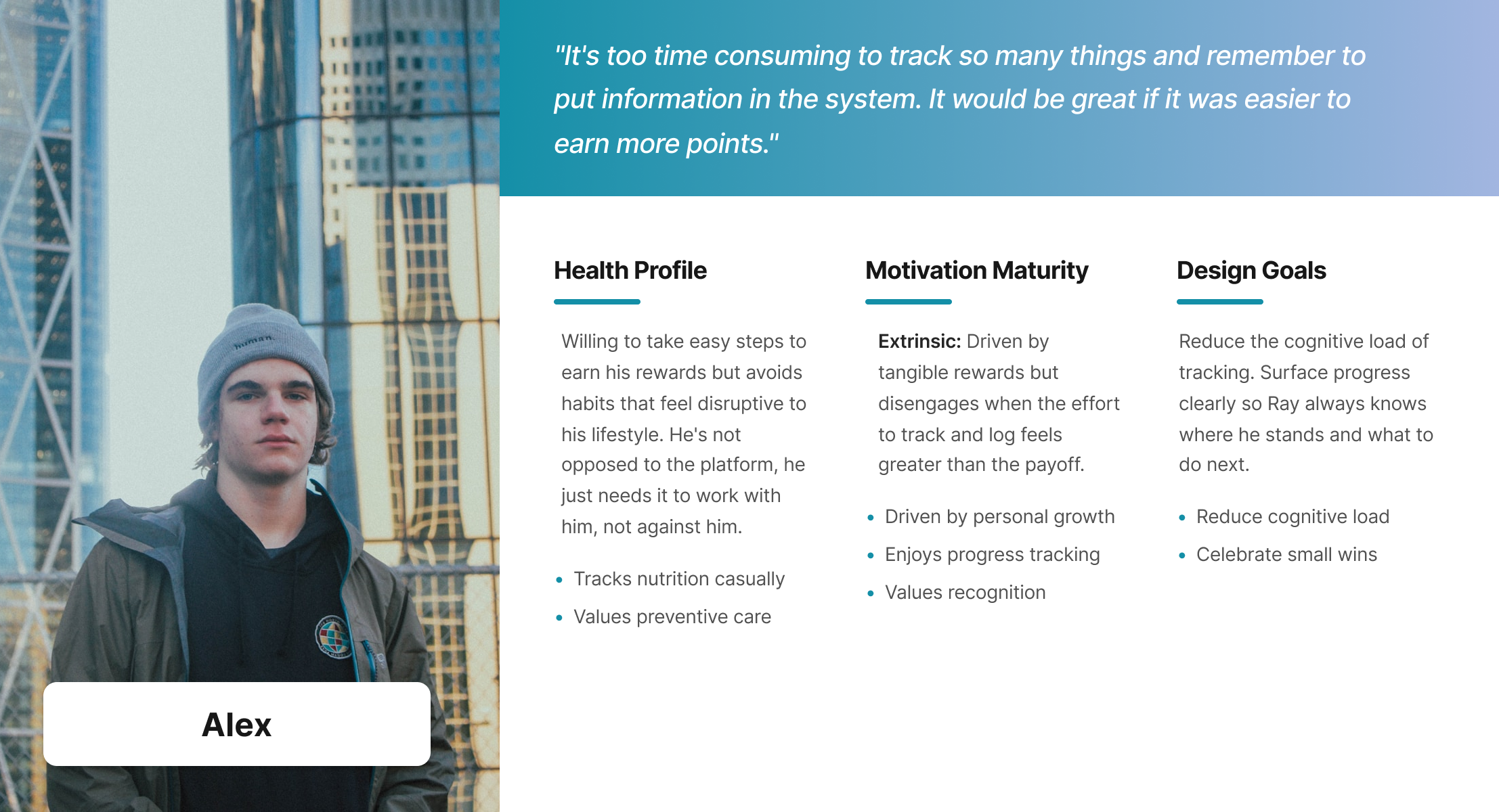
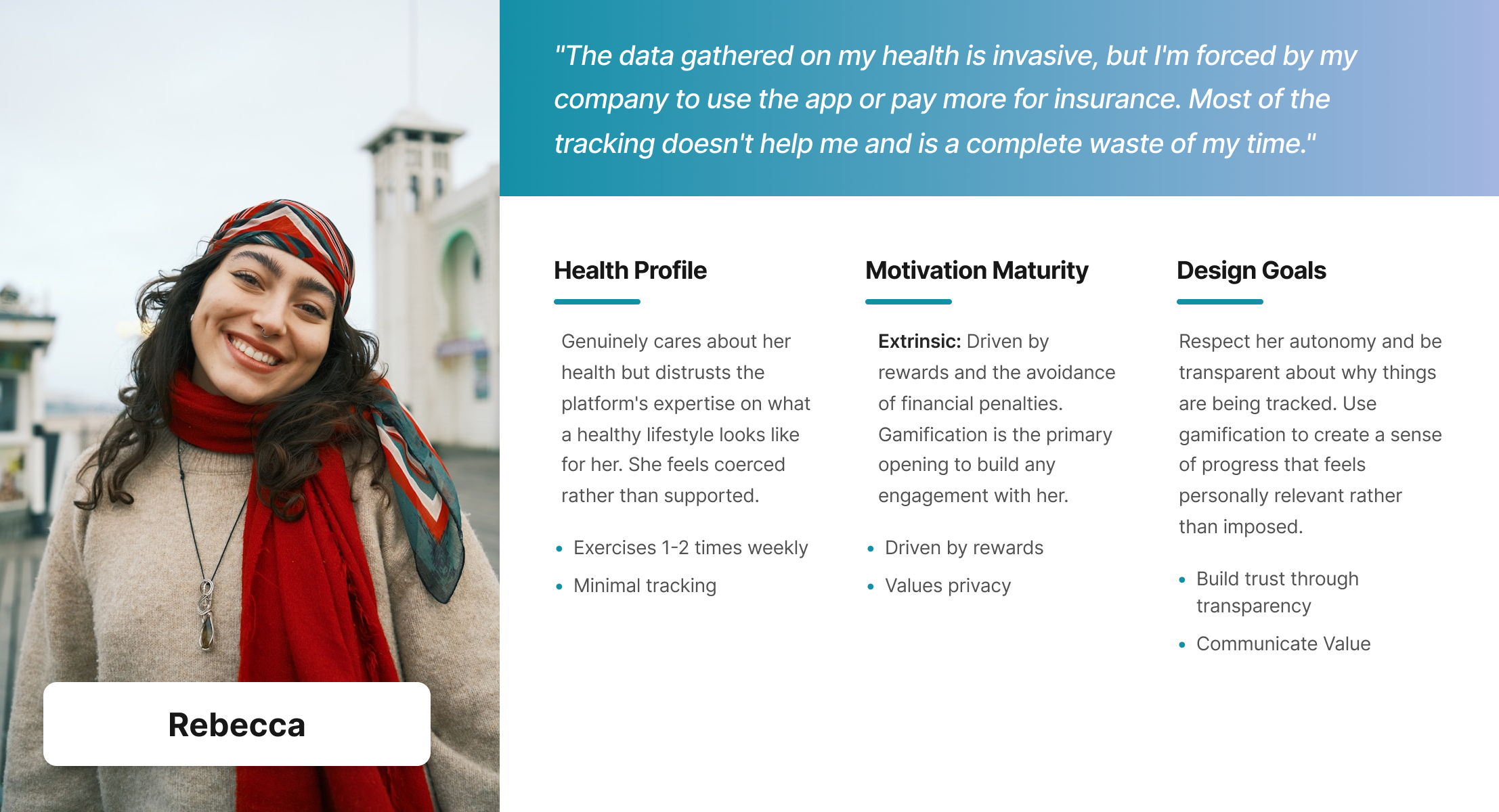
I partnered with a researcher to develop two personas that became the team's north star throughout the project. Rather than chasing a one-size-fits-all solution, Alex and Rebecca kept us grounded in the real spectrum of members we were designing for. From someone who just wants frictionless reward tracking to someone who resents being on the platform entirely.
Define
Baseline Evaluation
We ran moderated usability sessions with five to eight newer platform users to understand:
• What was working
• Where confusion occurred
• How users interpreted reward rules
• Where confusion occurred
• How users interpreted reward rules
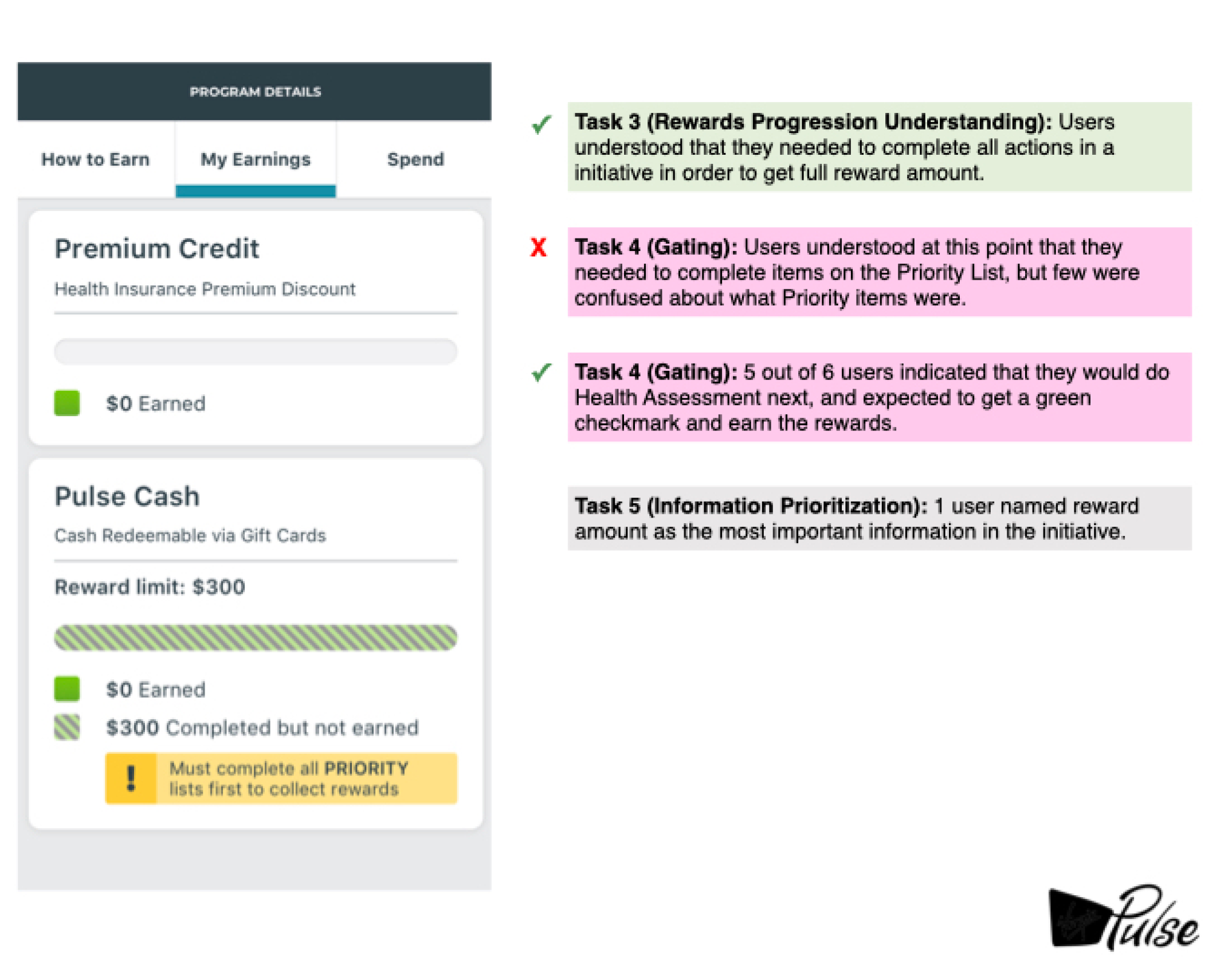
Core insight
The findings pointed to the same core problem from multiple angles. The system had logic. It just wasn't visible to the people it was meant to motivate.
- Users couldn't identify what they were actually earning
- Users didn't know where to see the details behind a reward
- Users didn't know which deadlines tied to specific actions or how grouped activities determined completion
- Users didn't know where to see the details behind a reward
- Users didn't know which deadlines tied to specific actions or how grouped activities determined completion
ideation
Exploring Solutions
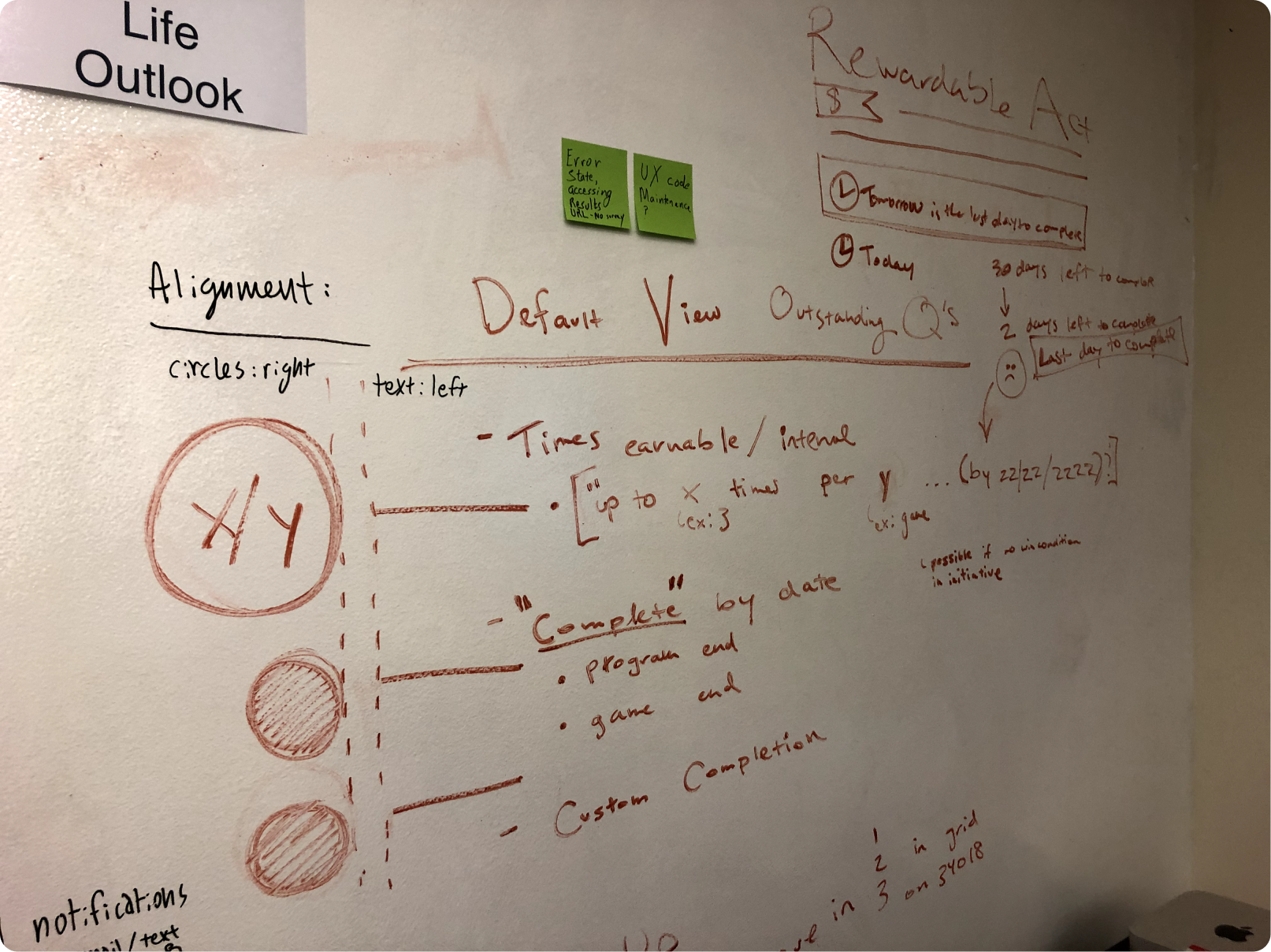
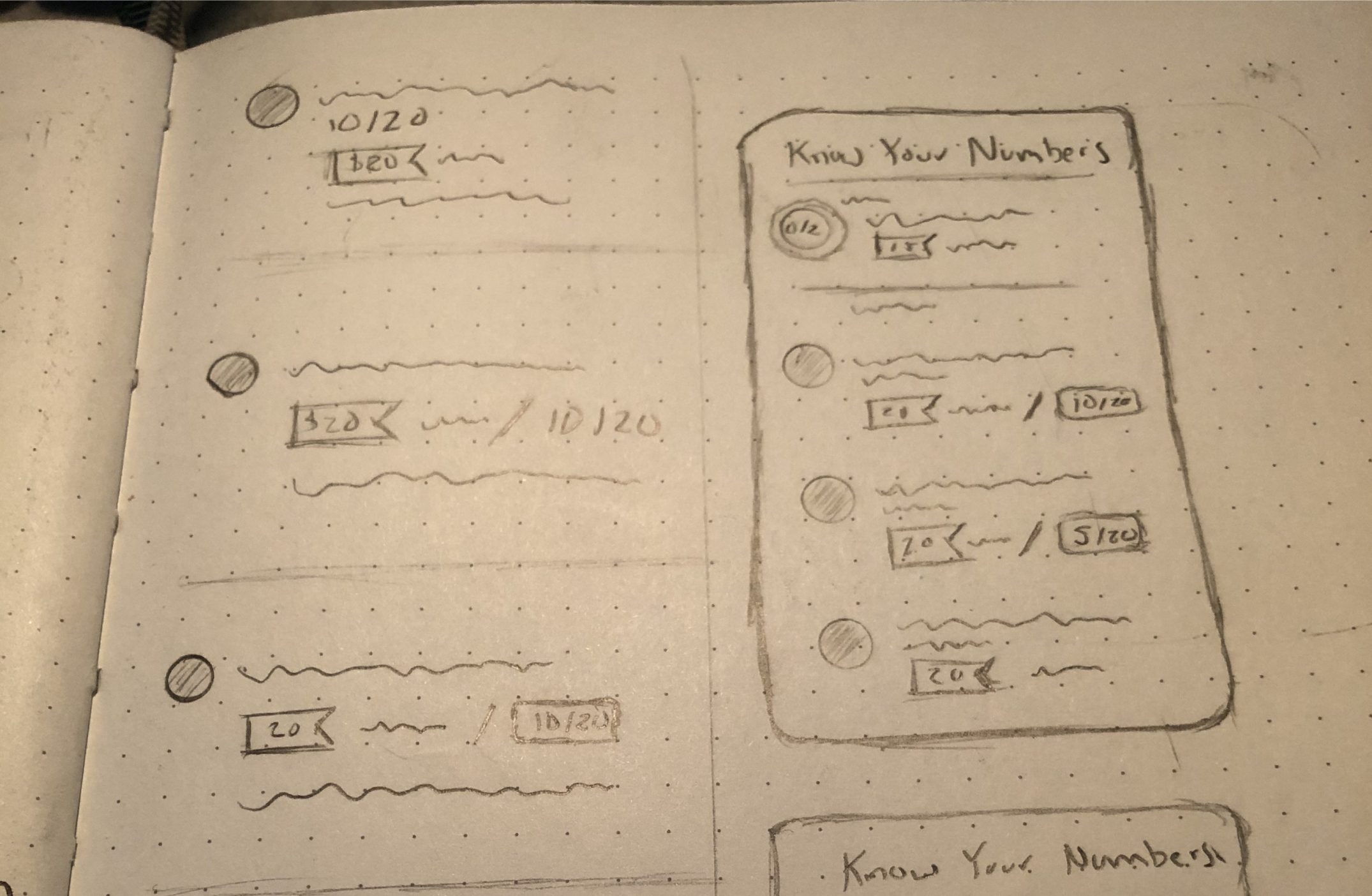
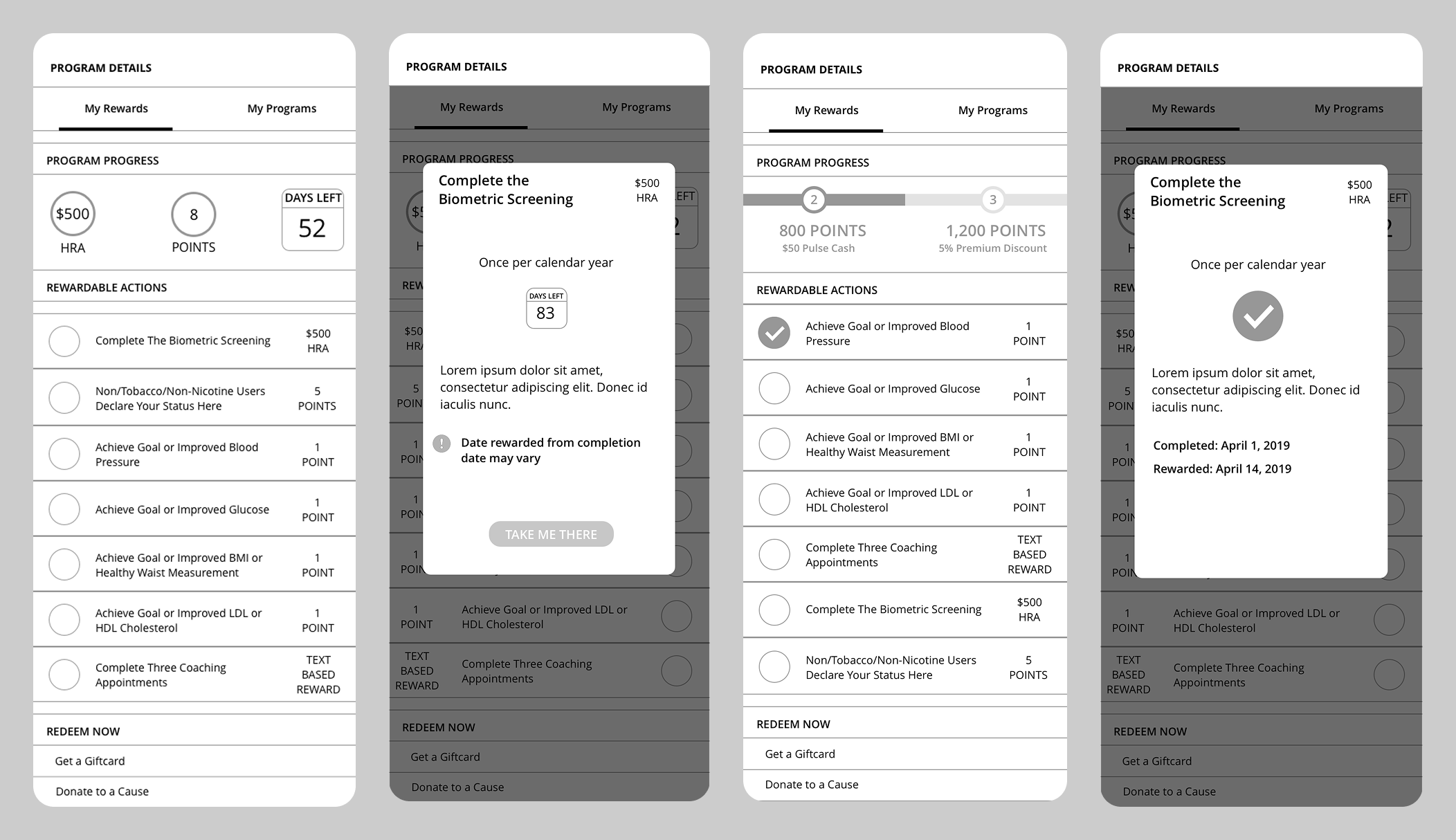
Early concepts explored different ways of communicating reward eligibility, deadlines, and completion thresholds. I focused on balancing clarity with a lightweight interface that wouldn’t overwhelm users with system rules.
Testing
Round 2 - 4 — Iterative testing
Rounds 2 - 4 We followed the same structure: moderated usability sessions with five to eight participants, each round building directly on what the previous one exposed. We introduced different task completion flows, tested variations in how progress was surfaced, iterated on gating messaging, and refined how win conditions were communicated to members.
Some changes landed immediately and were carried forward unchanged. Others needed all four rounds to get right, each iteration revealing a new layer of friction that only became visible once the more obvious problems were resolved.
By the final round the experience had been tightened significantly, not through a single breakthrough but through the cumulative pressure of putting real users in front of the work again and again.
Core insight - core user needs
Reward Clarity : Clearly define what the reward is
Reward Details : Provide a clerar place to view reward info
Deadline Visibility : Highlight time-sensitive deadlines
Win Conditions : Explain how to complete grouped actions
Design decisions
Defining the Reward
Problem: Users didn’t always understand what they were earning.
Solution: Clear reward labeling, Dedicated reward detail surfaces, More explicit incentive descriptions

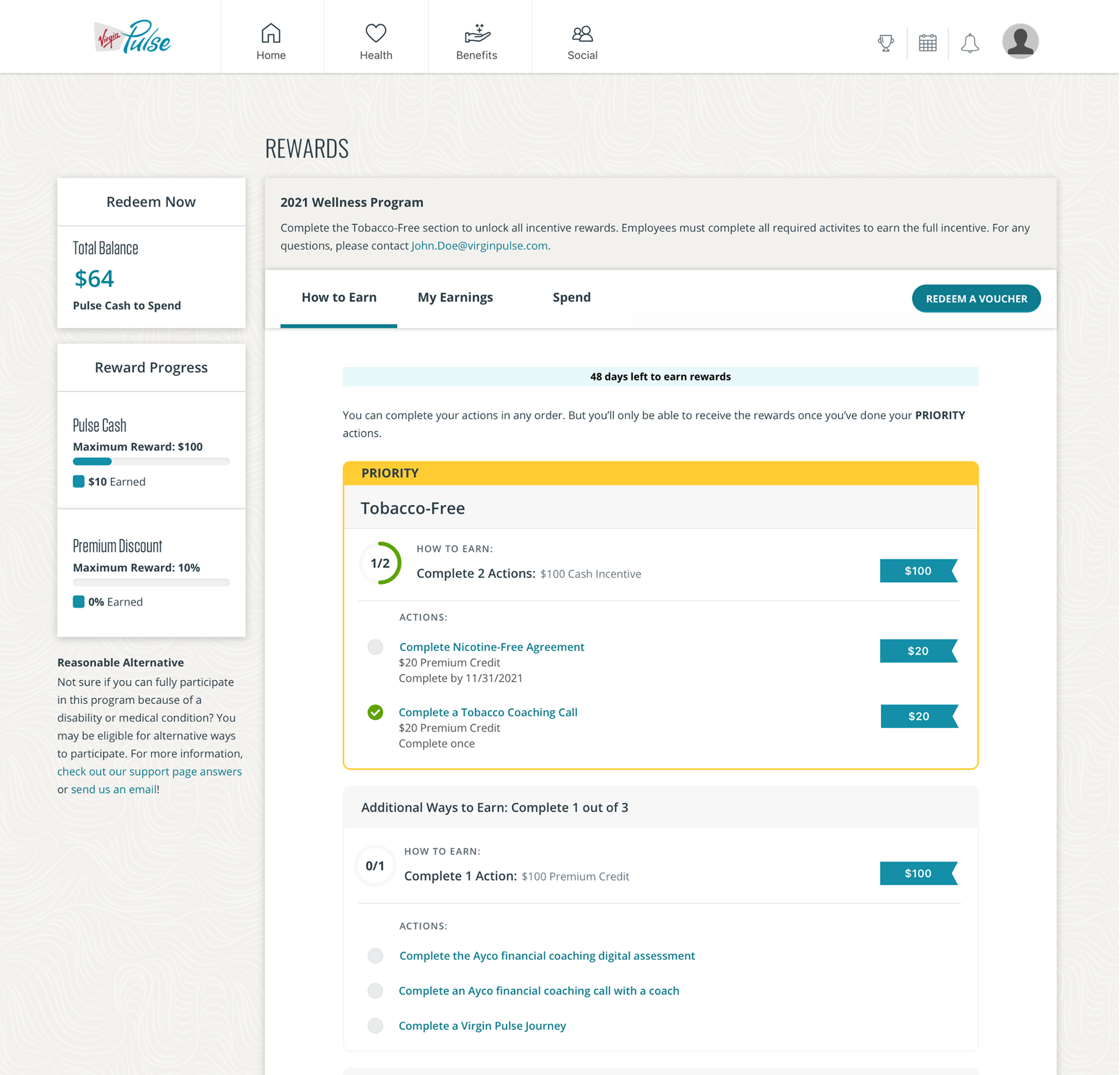
Clarifying Win Conditions
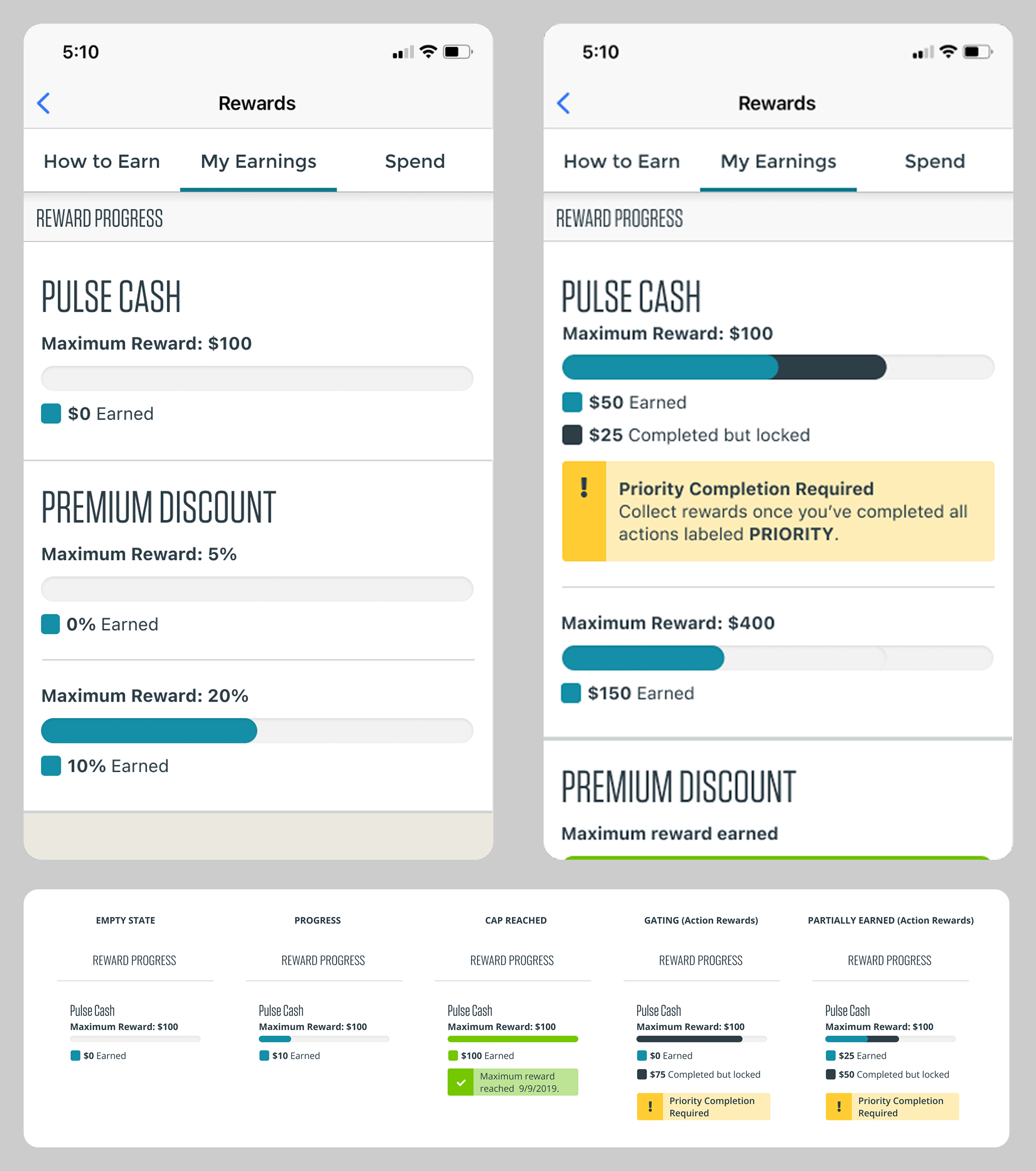
Problem: Users didn’t understand how many actions within a group were required to earn a reward.
Solution: Explicit “win condition” messaging, Progress indicators tied to grouped actions, Clear threshold communication
Gating & Completed but Locked
Problem: Users who completed gated actions without finishing prerequisites were confused about why rewards weren’t issued.
Solution: Introduced a “Completed but Locked” state to acknowledge effort while clearly communicating remaining eligibility requirements.
impact
Post Launch Results
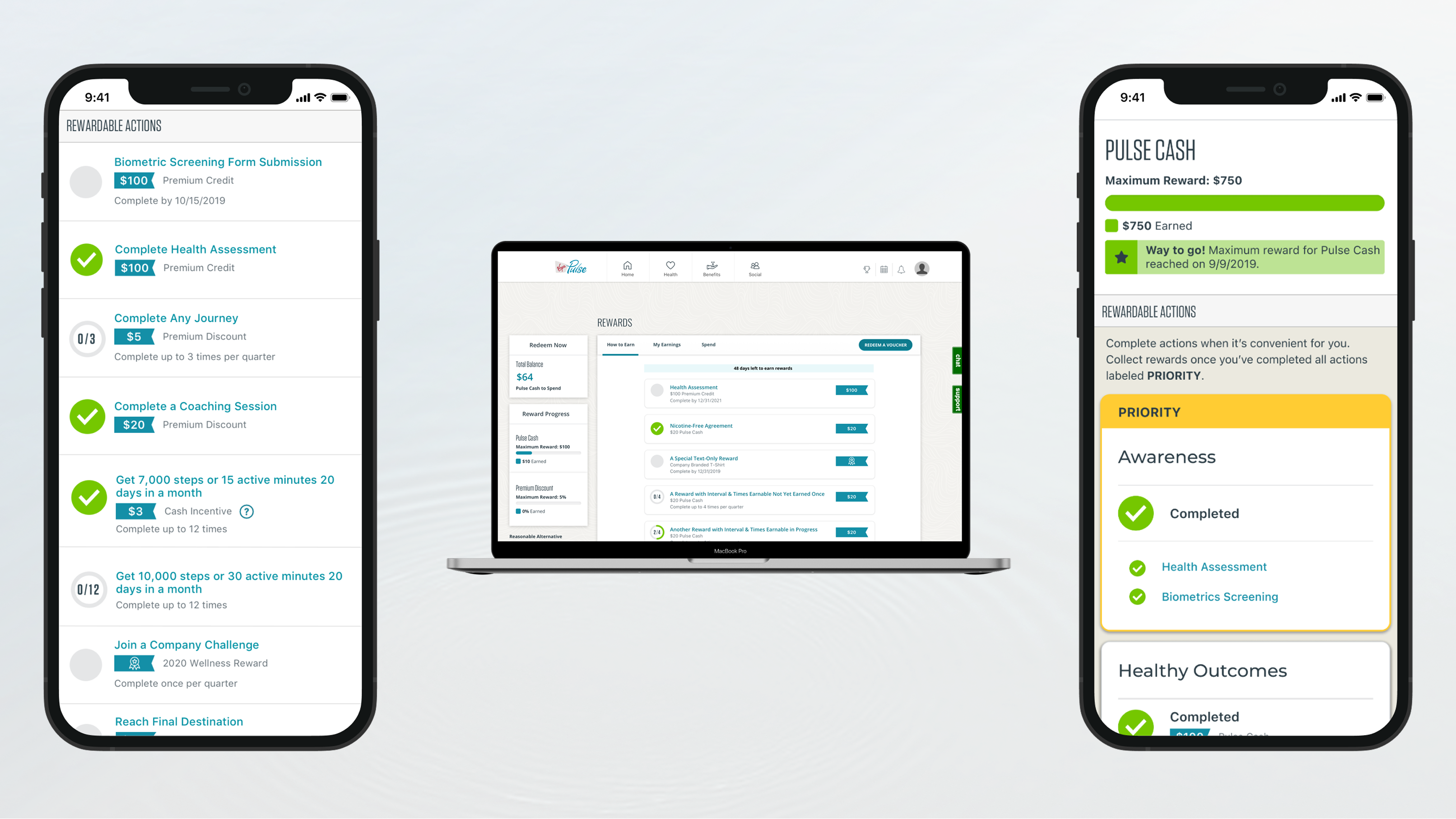
The clearest signal came from support. After launch, rewards-related support calls went down. Members were reaching out less often to ask why they hadn't earned something or what they needed to do next, which had been one of the most common reasons they contacted support before the redesign.
Improved clarity around rewards
Users better understood what the reward actually is, where to find details, and how to earn it
Increased visibility of time-sensitive actions
Deadlines were clearly surfaced. Users could quickly identify what needed to be completed and by when
Clearer completion criteria for grouped actions
Users understood the “win condition” with less ambiguity around what counts as completion
More intuitive and consistent experience across systems
Unified patterns across Redbrick + Simply Well and reduced cognitive load when navigating rewards
Up next
There's more to see
Some projects are available upon request due to NDA. Reach out and I'll share access.